1937 Horch 853 Cabriolet
The two-door cabriolet ranks among the most visually arresting body styles available on the 853 chassis (its low, vee’d split windshield and long, dramatically swept tail giving the car a purposeful character that set it apart from the more formal Horch coachwork of the period).
Generously proportioned fenders followed the full length of the body, and while the 853 sat within the Auto Union family alongside Audi, DKW, and Wanderer, it operated at an entirely different level of the market.
Powering the chassis was a Fritz Fiedler-designed single-overhead-cam inline eight running in nine main bearings, backed by a four-speed gearbox with overdrive and servo-assisted hydraulic brakes.
Though a direct competitor to the Mercedes-Benz 500K and later 540K, the Horch differed in emphasis (where the Mercedes leaned sporting, the 853 leaned toward comfort and refinement), moving nearly 5,100 pounds (approximately 2,300 kg) of automobile with a cast-iron engine that prioritized low-end pull over high-rpm performance.
A total of 950 examples of the 853 and 853A were built between 1935 and 1940. Of those, roughly 150 are believed to survive, the vast majority in limousine or four-door convertible form, making two-door cabriolet examples among the most sought-after configurations.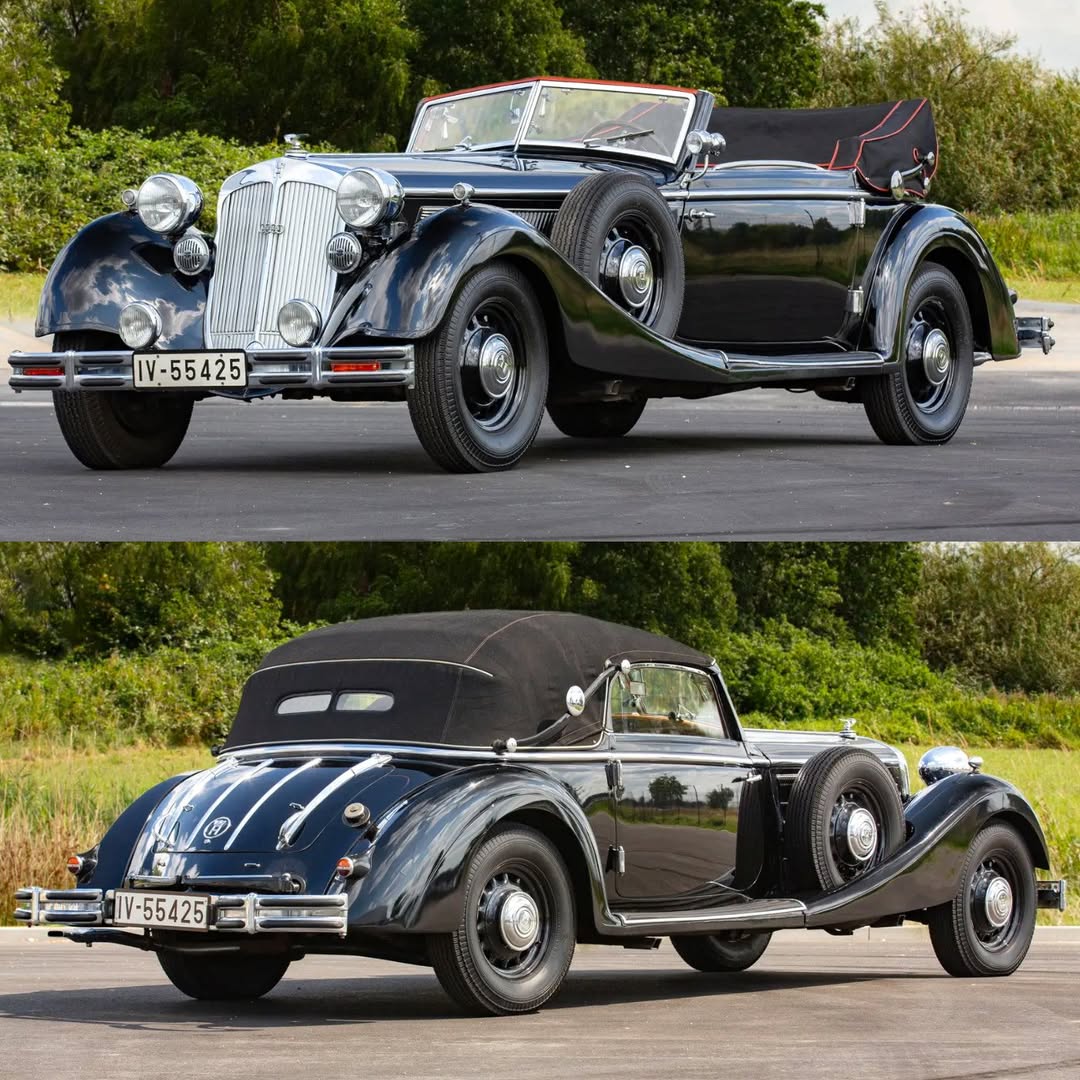
Source