1939 Aston Martin Speed Model Type C
Engineer Claude Hill developed Aston Martin’s final pre‑war model with a focus on aerodynamic efficiency rarely seen in 1930s sports cars. The Type C body featured a rounded radiator shell and headlamps set slightly recessed into the front fenders, giving the car a sleek, purposeful appearance.
Light‑alloy body panels combined with steel fenders created a strong yet lightweight structure that reflected the marque’s racing pedigree.
Unveiled at the 1938 Earls Court Motor Show, the Type C represented the ultimate evolution of Aston Martin’s two‑liter Speed Model. Only eight chassis were completed with this distinctive bodywork, making it one of the rarest Aston Martins ever produced.
Its aerodynamic profile improved performance significantly, with some examples capable of exceeding 100 mph, nearly 20 mph faster than earlier open‑wheel or 2/4‑seater variants.
Power came from Hill’s advanced 2‑liter inline four‑cylinder engine, equipped with larger carburetors, high‑lift camshafts, and a dry‑sump lubrication system. The chassis was shorter, wider, and stiffer than previous designs, providing sharper handling and greater stability.
A total of 23 Speed Models were built between 1936 and 1940, with only eight completed as Type Cs. As Aston Martin’s last pre‑war model, the Speed Model Type C stands as one of the most technically refined and visually distinctive sports cars of its era.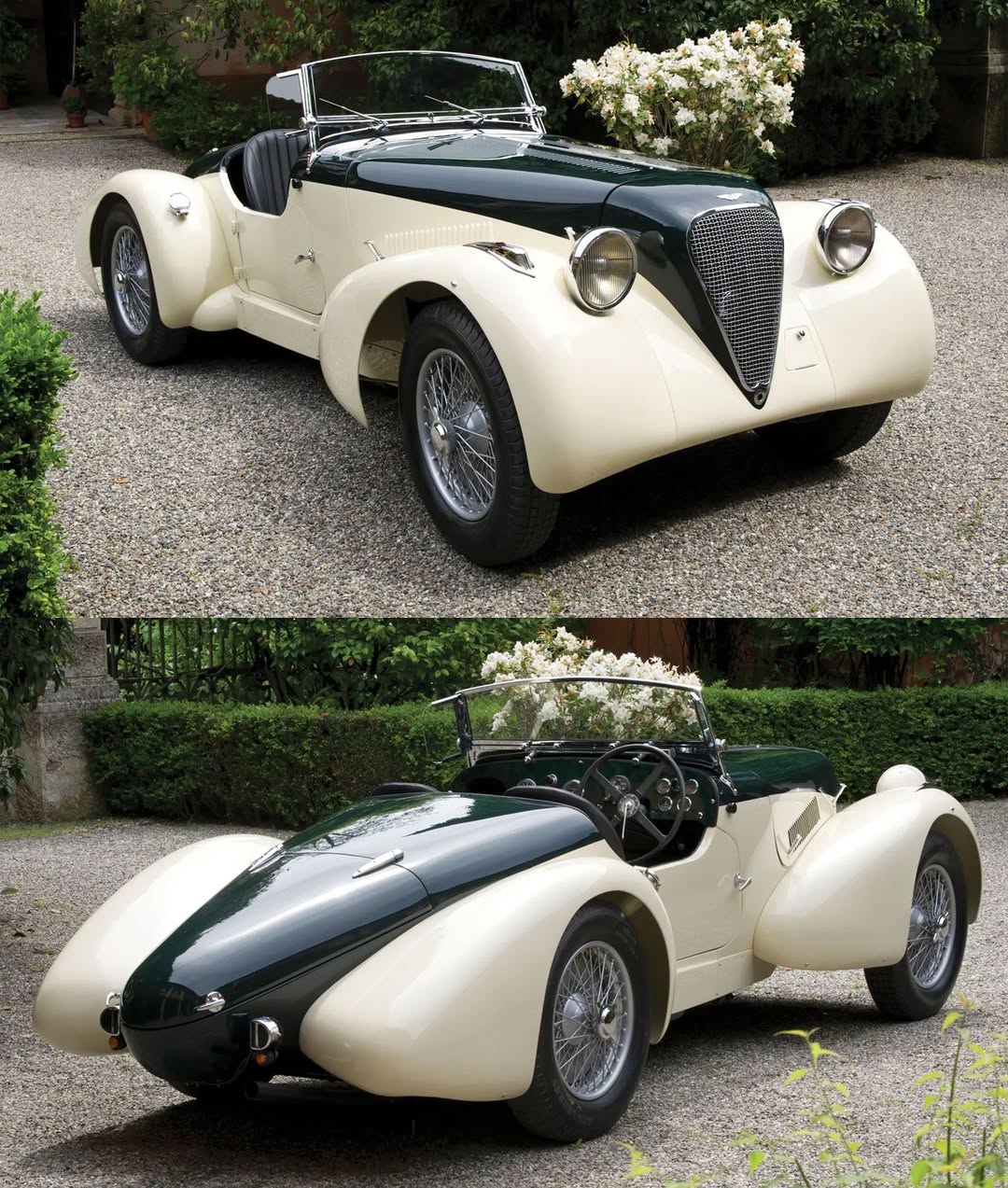
Source