1955 Mercedes-Benz 300 SL Gullwing Coupe
The 1955 Mercedes-Benz 300 SL Gullwing Coupe featured distinctive upward-opening doors that gave the car its famous nickname.
This design was dictated by engineering necessity since the car’s innovative tubular space-frame chassis, adapted directly from Mercedes-Benz’s Le Mans–winning W194 race car, had high side sills that prevented the use of conventional doors. The result was one of the most iconic and instantly recognizable automotive designs in history.
Power came from a 3.0-liter (2,996cc) inline-six engine producing approximately 215 horsepower at 5,800 rpm, making it one of the fastest production cars of its time (and widely regarded as the fastest mass-produced road car in the world, with a top speed of up to 161 mph depending on gearing and tires).
The engine employed Bosch direct fuel injection, making the 300 SL the first production automobile in the world to use a direct fuel-injection system. This advanced technology significantly improved both performance and efficiency compared with the carbureted W194 race engine.
The lightweight tubular space-frame construction, weighing just 183 pounds (83 kg), gave the 300 SL exceptional rigidity and handling precision. Despite its racing pedigree, the car was luxuriously appointed inside, with leather upholstery, a tilting steering wheel for easier entry, and optional Rudge knock-off wheels.
Buyers could also choose from a range of striking colors, including the famous “Silver Grey Metallic”, “Strawberry Red Metallic” (shown here), and “Graphite Grey.”
Mercedes-Benz built 1,400 Gullwing Coupes between 1954 and 1957, including 29 lightweight aluminum-bodied examples and a handful of factory competition cars. Production then shifted to the open 300 SL Roadster in 1957, which featured a redesigned chassis for improved accessibility and comfort.
Today, the Gullwing remains one of the most coveted postwar sports cars, representing a perfect blend of racing technology, engineering innovation, and timeless style.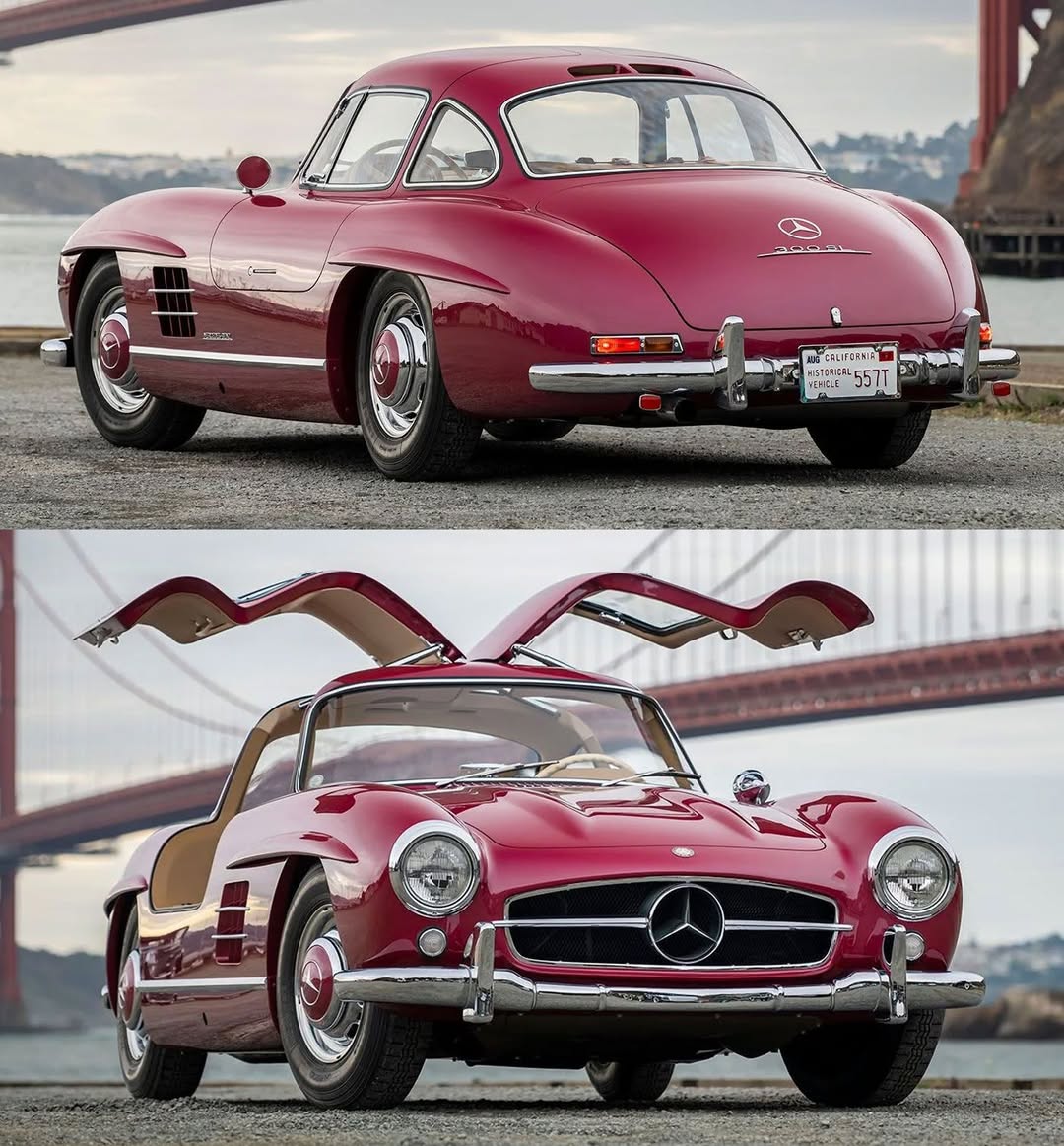
Source