1933 Pierce-Arrow Model 1239 Silver Arrow
Philip O. Wright’s design for the 1933 Chicago World’s Fair created one of the Depression era’s most radical American automobiles.
Built by Pierce-Arrow in Buffalo as an experimental project under chief engineer Karl M. Wise, the Silver Arrow featured flush-fitting doors with recessed handles, integrated front fenders with faired-in headlamps, and a roof flowing in one continuous plane from windshield to tail.
Twin spare tires were concealed behind the front wheels, while the absence of running boards and the use of enveloping rear fenders reinforced the car’s aerodynamic profile.
The step-down interior predated similar Cord construction by three years and Hudson’s famous design by fifteen. Beneath the gleaming coachwork sat a 139-inch wheelbase chassis powered by a 462 cubic inch side-valve V-12 producing 175 horsepower.
Vacuum-assisted four-wheel mechanical drum brakes were advanced for 1933, and the streamlined body commanded attention at both the New York Auto Show and Chicago’s “Century of Progress” exhibition.
Priced at $10,000 (often said to be the cost of three houses in Depression-era America), only five Silver Arrows were built for promotional purposes. Three survive today, each representing automotive design’s dramatic leap into the streamlined age.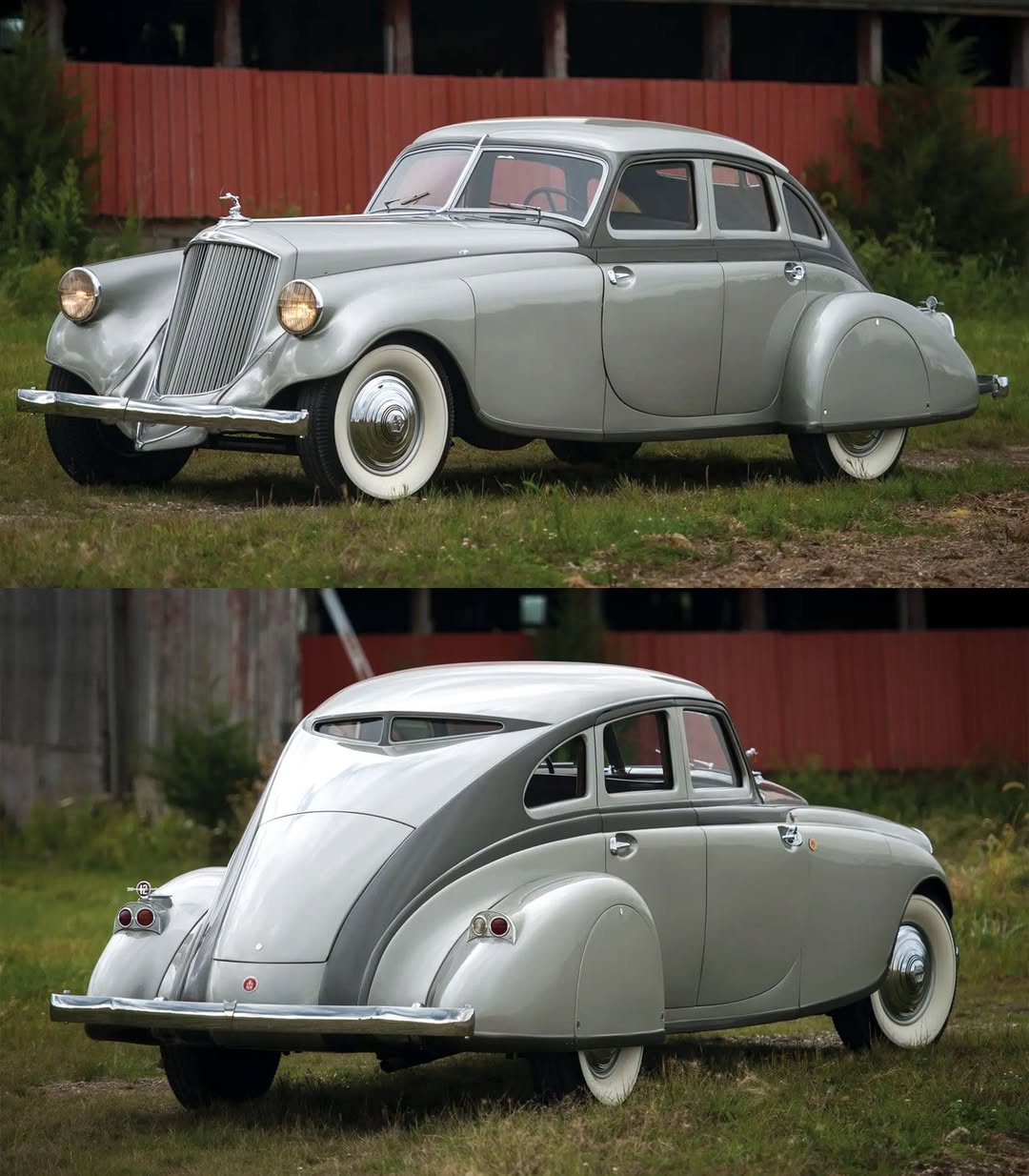
Source