1959 BMW 503 Series II Cabriolet
Albrecht von Goertz’s elegant grand touring design emerged from BMW’s ambitious, but financially disastrous, effort to compete in the luxury sports car market alongside Mercedes-Benz.
Production totaled just 413 examples built between May 1956 and March 1959, with only 139 receiving Cabriolet coachwork, which featured an electrically operated convertible top and power windows that were among the most advanced systems offered on a European production car of the era.
Series II revisions arrived in September 1957, adapting elements of the 507 roadster’s drivetrain configuration. The four-speed manual transmission was moved from its earlier remote mounting position and bolted directly to the engine, while the shift lever relocated from the steering column to the floor.
This change improved shift quality and mechanical efficiency compared to the Series I layout derived from the 502 sedan.
Power came from BMW’s aluminum 193-cubic-inch (3.2-liter) V8 with dual carburetors and a chain-driven oil pump, producing about 140 horsepower at 4,800 rpm. Some markets received higher-output tuning similar to the 507, rated at up to 150 horsepower.
This combination allowed the 2+2 Cabriolet to reach speeds approaching 120 mph while still offering genuine luggage space for touring.
Despite Battista “Pinin” Farina reportedly considering the 503 superior to the contemporary 507, the Cabriolet remained overshadowed by its more famous roadster sibling.
Ironically, the 503 outsold the 507 by a substantial margin, even as both models contributed to BMW’s financial strain during the late 1950s.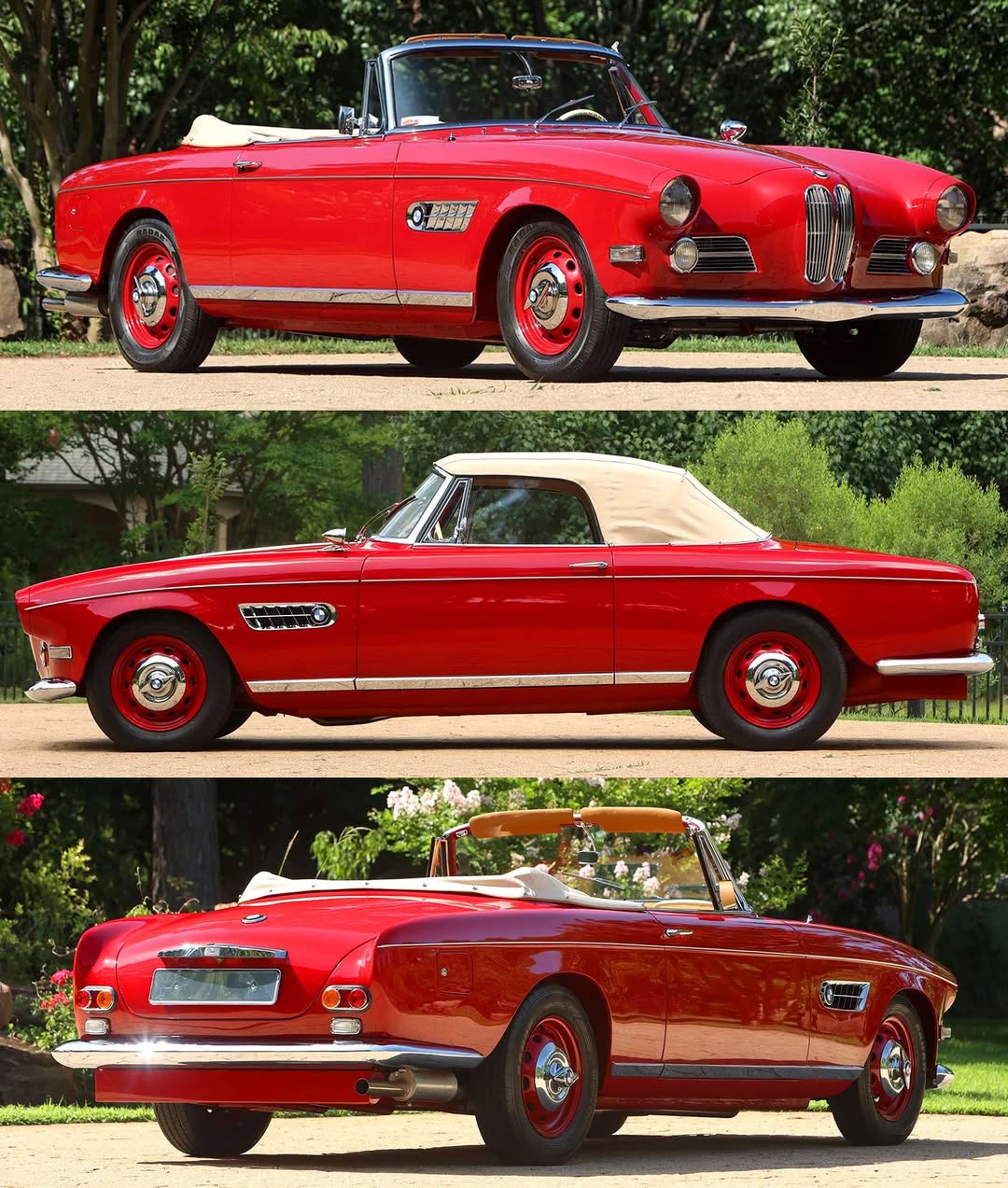
Source