1960 Renault Floride
Pietro Frua’s design, executed by Carrozzeria Ghia, gave the Floride a profile well above its mechanicals, drawing comparisons to cars considerably more expensive.
Conceived as Renault’s answer to the Volkswagen Karmann Ghia, it was presented at the 1958 Paris Motor Show as a 2+2 offered as a coupe and cabriolet (with a convertible hardtop configuration available). The Floride name applied to European-market cars, while those shipped to North America were marketed as the Caravelle beginning in 1960.
European-specification examples like this one were fitted with Cibié Optique headlamps, a period detail that distinguishes them from sealed-beam US counterparts. The car’s curb weight was approximately 1,500 lbs (680 kg).
The body sat on the floorpan and running gear of the Renault Dauphine, with a rear-mounted 845 cc four-cylinder producing around 34 to 40 horsepower, depending on specification.
A Gordini-tuned version offered a modest bump in output. For 1960, Renault introduced suspension revisions aimed at improving ride quality and stability over earlier cars, and a four-speed manual gearbox was available in place of the earlier three-speed.
Performance was never the point. The Floride was a light touring car built around its appearance and economy, and the Ghia-built coachwork delivered the style that defined the model’s appeal.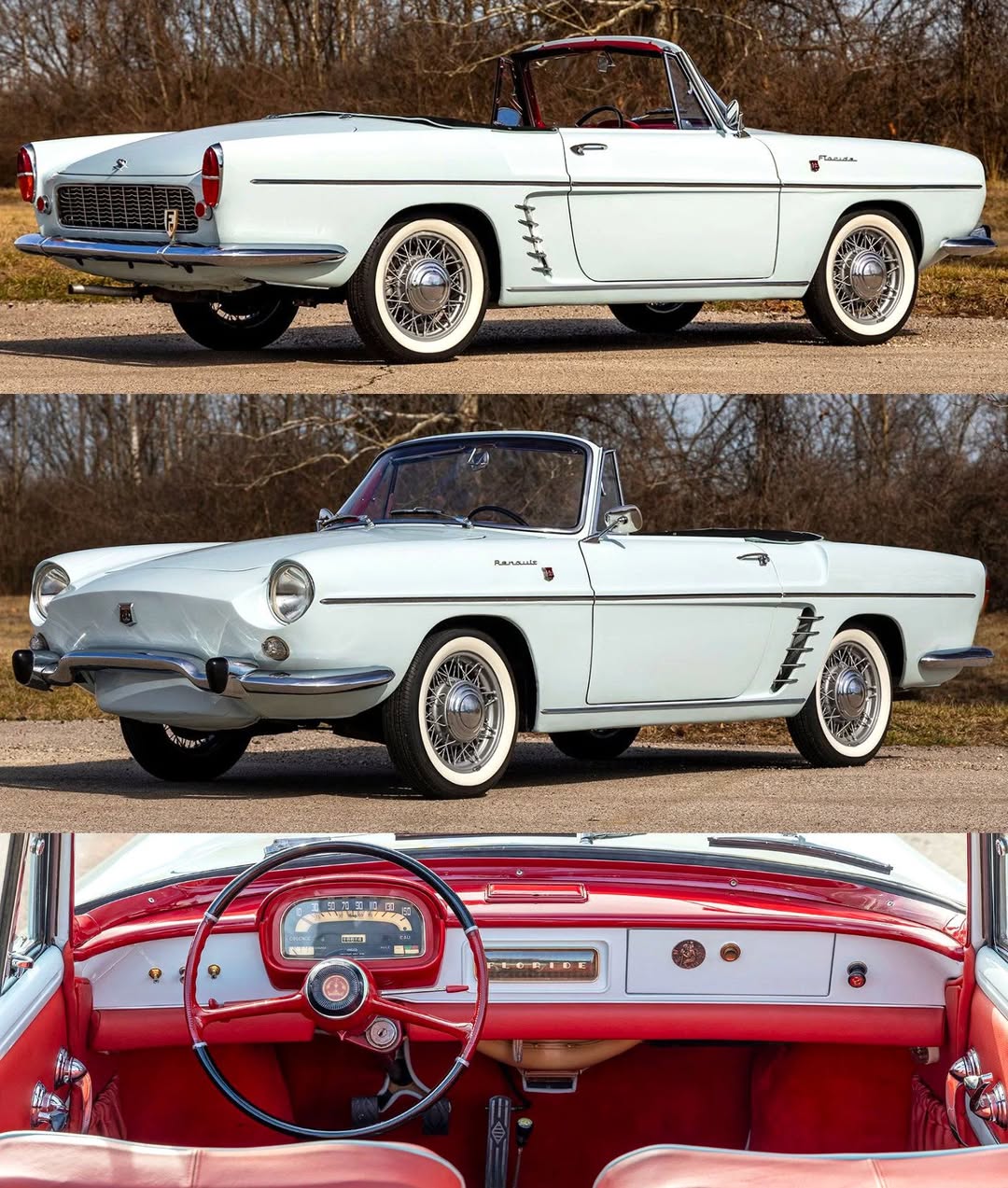
Source