1963 Chevrolet Corvette Split Window
America’s sports car underwent its most dramatic transformation in 1963, introducing the revolutionary split rear window that would appear for only one model year. This distinctive design element, inspired by Bill Mitchell’s Sting Ray racer, became one of the most coveted features in automotive history despite reducing rear visibility.
The completely redesigned body sat on a wheelbase shortened by four inches to 98 inches, significantly improving handling. Zora Arkus-Duntov’s new independent rear suspension replaced the previous solid axle, using a frame-mounted differential with U-jointed half-shafts connected by a transverse leaf spring derived from the CERV I concept car.
Hidden headlights marked another first for Corvette, and four engine options ranged from 250 to 360 horsepower, all based on the proven 327 cubic inch small-block V8. Only 199 examples received the Z06 Special Performance Equipment package, while just 1,114 cars were equipped with the genuine leather seat option RPO 898, making properly optioned examples exceptionally rare today.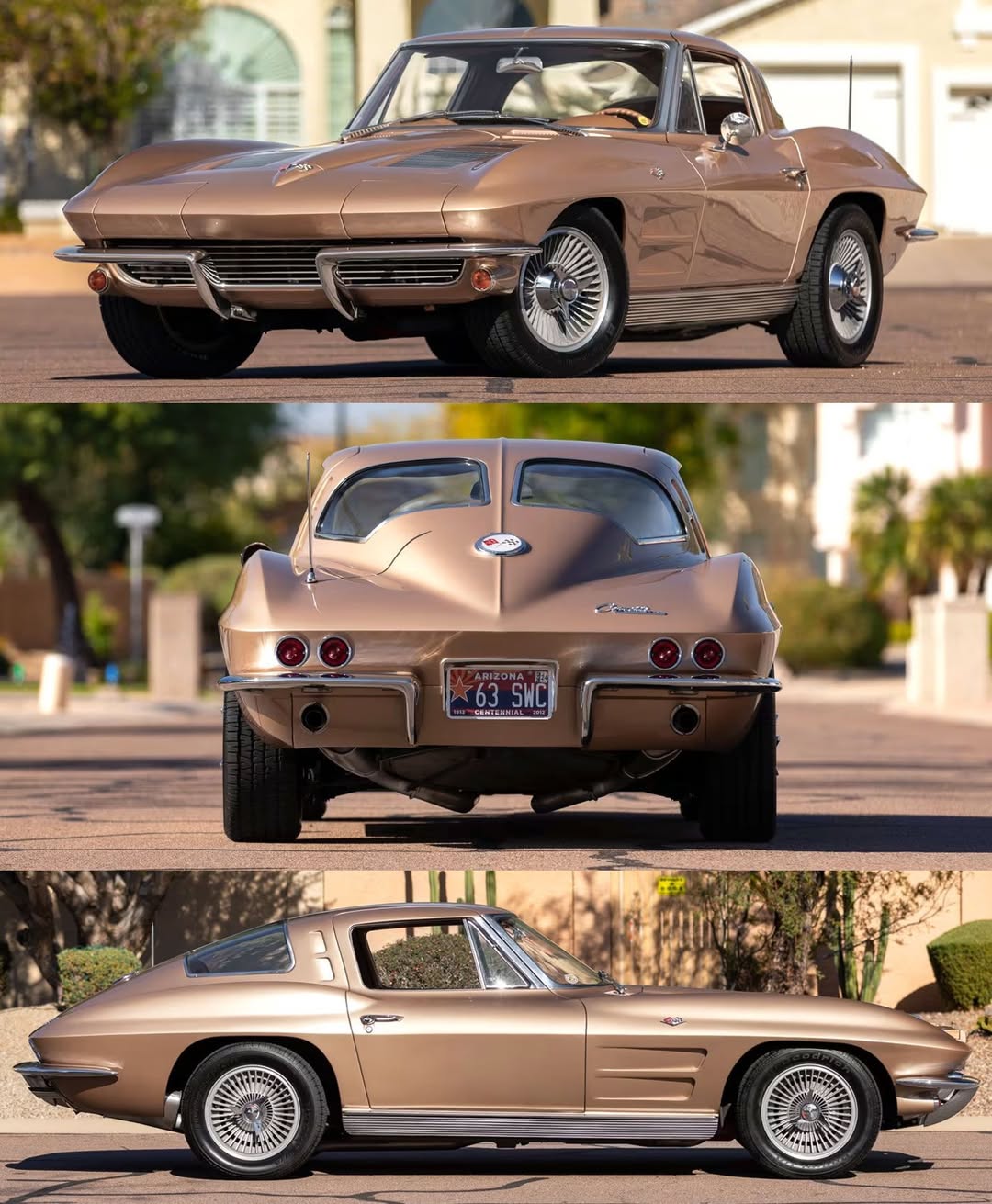
Source