1912 Peerless Model 60 Runabout
Displacement wars during the Brass Era produced some truly massive engines, but only two manufacturers ever broke the 800-cubic-inch barrier.
The 1912 Peerless Model 60 tied the Pierce-Arrow Model 66 at 824 cubic inches (13.5 liters) for the largest engine ever fitted to a production automobile (exceeding even the later Bugatti Royale by more than a liter).
Peerless introduced this behemoth to compete directly with Pierce-Arrow’s 66-hp model. The T-head six-cylinder engine featured cylinders cast in pairs with a 6-inch bore and 8-inch stroke, breathing through two large valves per cylinder.
A centrally mounted carburetor fed the mixture through long brass intake runners to this enormous powerplant, which barely fit beneath the hood. Power was transmitted through a four-speed sliding-gear transmission to a live rear axle supported by semi-elliptic leaf springs.
Priced at $6,000 in 1912, the Model 60 actually cost more than Pierce-Arrow’s $5,750 offering, likely explaining why fewer Peerless examples were sold.
The driving experience was extraordinary. Immense torque could twist the chassis when releasing the clutch, and the slow, rhythmic exhaust note reflected an engine producing most of its power at just a few hundred RPM.
Far less recognized today than the famous Pierce-Arrow 66, the Peerless Model 60 remains equally refined and well-engineered, with surviving examples now cherished as rare treasures.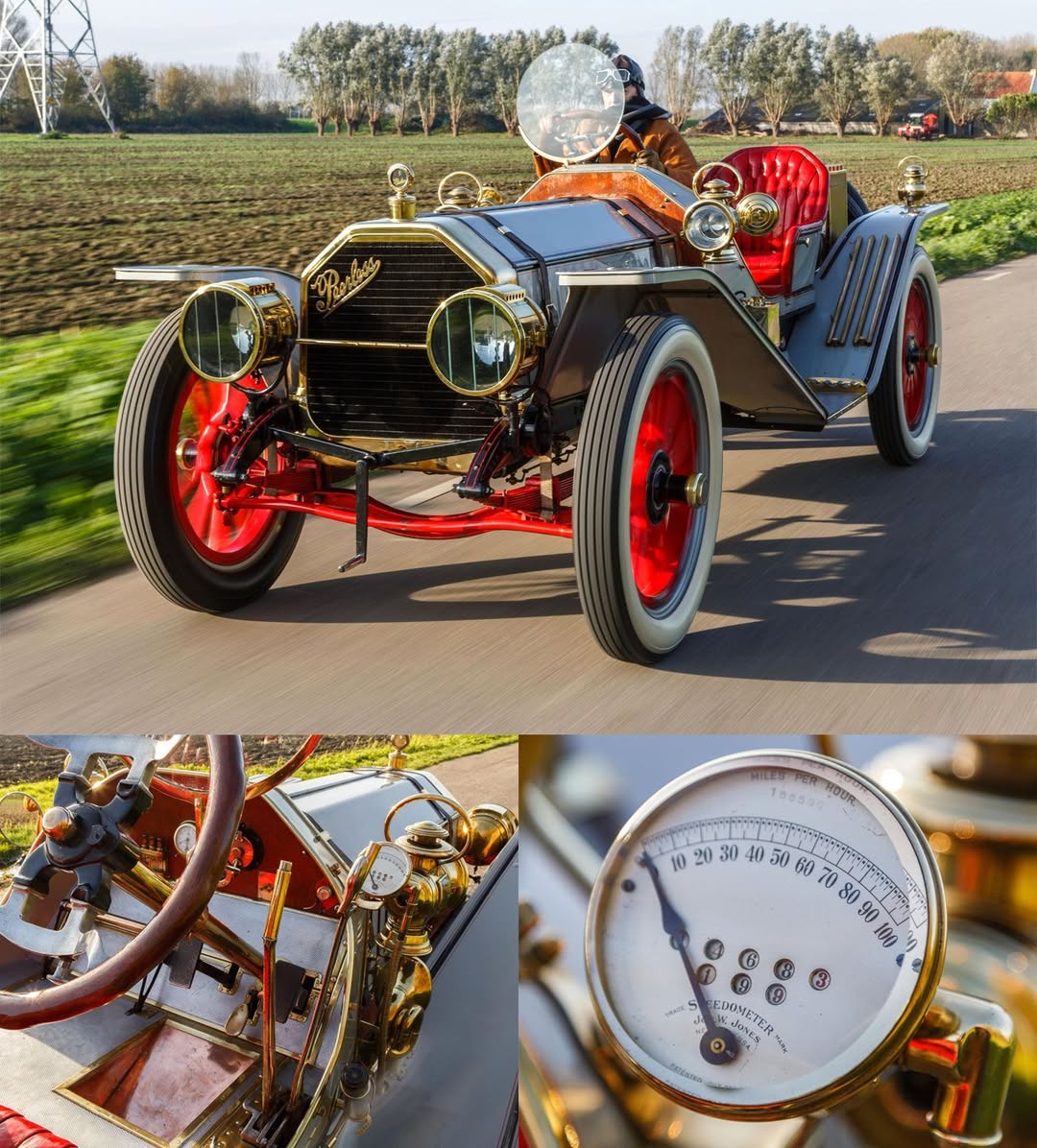
Source