1940 Ford Model 01A Deluxe “Woodie” Station Wagon
Eugene Gregorie’s sleek styling for 1940 brought Ford’s Deluxe line into the modern age with integrated headlamps, flowing body contours, and a lower, wider stance that set it apart from prewar Fords.
The station wagon represented the most expensive body style in the entire Ford lineup at $947, yet only 8,730 Deluxe examples found buyers that year (the smallest production run among Deluxe offerings).
Wood-intensive construction distinguished these wagons from conventional steel-bodied Fords, even though they still used a steel cowl and front sheetmetal. Beginning with the 1940 model year, Ford shifted production from Murray Corporation to its own Iron Mountain facility in Michigan’s Upper Peninsula, where workers hand-built bodies using several hundred board-feet of lumber per vehicle.
Maple (and on some Deluxe wagons, birch) formed the structural framing, while panels in gumwood, maple, or mahogany provided the exterior surfacing and interior trim, all finished with multiple hand-sanded varnish coats.
Power came from the 221-cubic-inch flathead V-8 producing 85 horsepower, mated to a three-speed manual transmission on a 112-inch wheelbase. The combination delivered adequate performance for family and commercial hauling duties while maintaining the V-8’s characteristic low-speed torque and smoothness.
These station wagons accommodated up to eight passengers across three bench rows, with rear seating that could be removed or reconfigured to favor cargo. They served hotels, resorts, and families who needed substantial cargo capacity combined with passenger comfort in a premium wood-bodied package.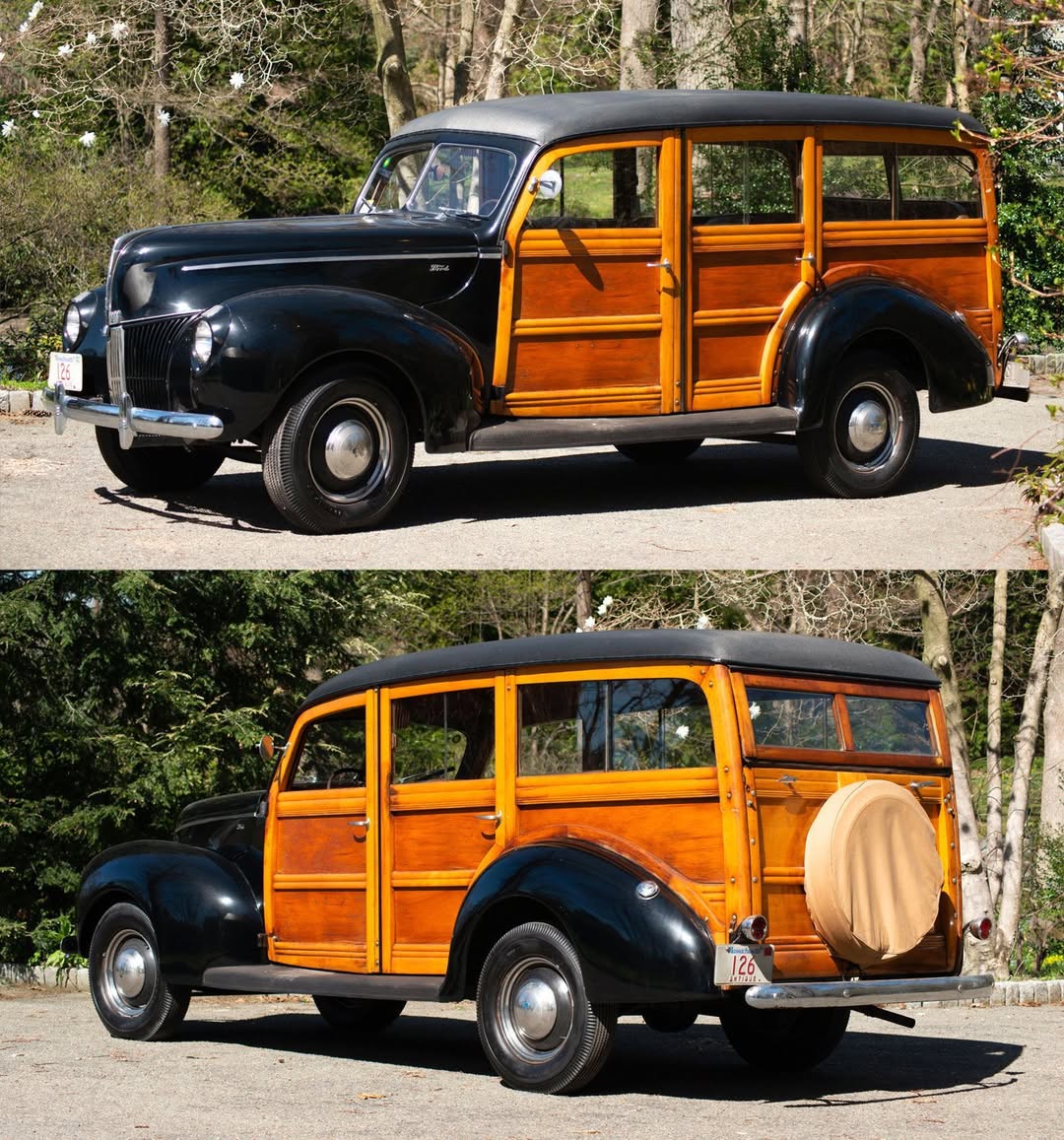
Source