1936 Bugatti Type 57 Stelvio (more photos 👇)
Jean Bugatti’s four-seat cabriolet design took its name from the Passo dello Stelvio in the Eastern Alps.
The Stelvio featured distinctive pontoon fenders and an Atalante-like rounded tail, with early 1935-1936 examples incorporating a folding windshield and a top that folded nearly flat into a purpose-built cut-out at the rear of the body. Most Stelvio coachwork came from Gangloff of Colmar, located near Bugatti’s Molsheim factory.
The design evolved throughout Type 57 production from 1934 through 1940, with later cars receiving headlamps integrated into the front fenders and optional rear wheel spats. Subtle changes to trim, lighting, and roof mechanisms reflected Jean Bugatti’s ongoing refinement of the original concept.
Power came from a 3.3-liter twin-overhead-camshaft straight-eight producing approximately 135 horsepower at 5,000 rpm, paired with a four-speed manual transmission.
Rudge-Whitworth 18-inch wire wheels and large 15-inch drum brakes were standard, with early cars using cable-operated brakes before Lockheed hydraulic brakes became available later in production. The supercharged Type 57C variant increased output to about 160 horsepower.
While marketed as four-passenger transportation, the rear seat offered limited legroom and functioned more practically as occasional seating. With the front passenger seat positioned forward, the Stelvio was better suited to relaxed touring than true four-adult accommodation.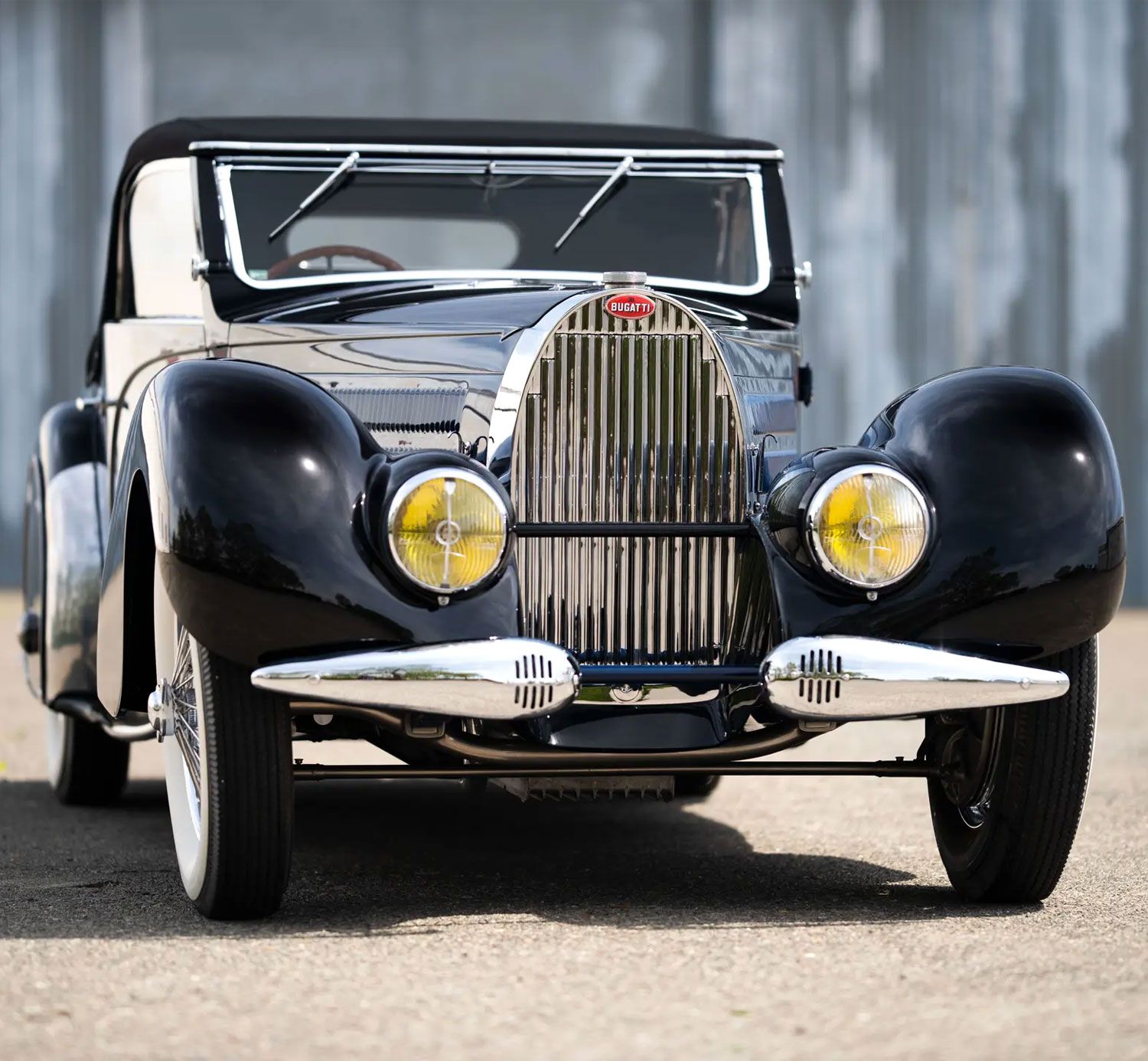
Source