1930 Cadillac V-16 All-Weather Phaeton
Cadillac’s surprise announcement at the January 1930 New York Auto Show changed the luxury car landscape immediately.
The new V-16 arrived as the first production sixteen-cylinder engine designed as such from the ground up (Bugatti’s earlier Type 45 used two inline-eight cylinder banks on a common crankcase), and it positioned Cadillac at the top of the fine car market in a single move.
The 452 CI overhead-valve engine, developed under Owen Nacker in near-total secrecy, produced 165 horsepower and was distinguished by its narrow 45-degree cylinder bank angle.
It was also among the first automotive engines to receive deliberate visual design treatment: most wiring was concealed, and the compartment was finished with polished aluminum, porcelain, and enameled valve covers bearing the Cadillac emblem.
Fleetwood handled coachwork duties on the All-Weather Phaeton body style, built on a substantial 148-inch wheelbase. A three-speed manual transmission and vacuum-assisted mechanical drum brakes were standard.
Depression-era economics kept production numbers low (total 1930 V-16 production reached 2,887 units across all body styles), placing the V-16 well beyond the reach of all but a handful of buyers at a base price around $5,350, more than seven times that of a contemporary Chevrolet.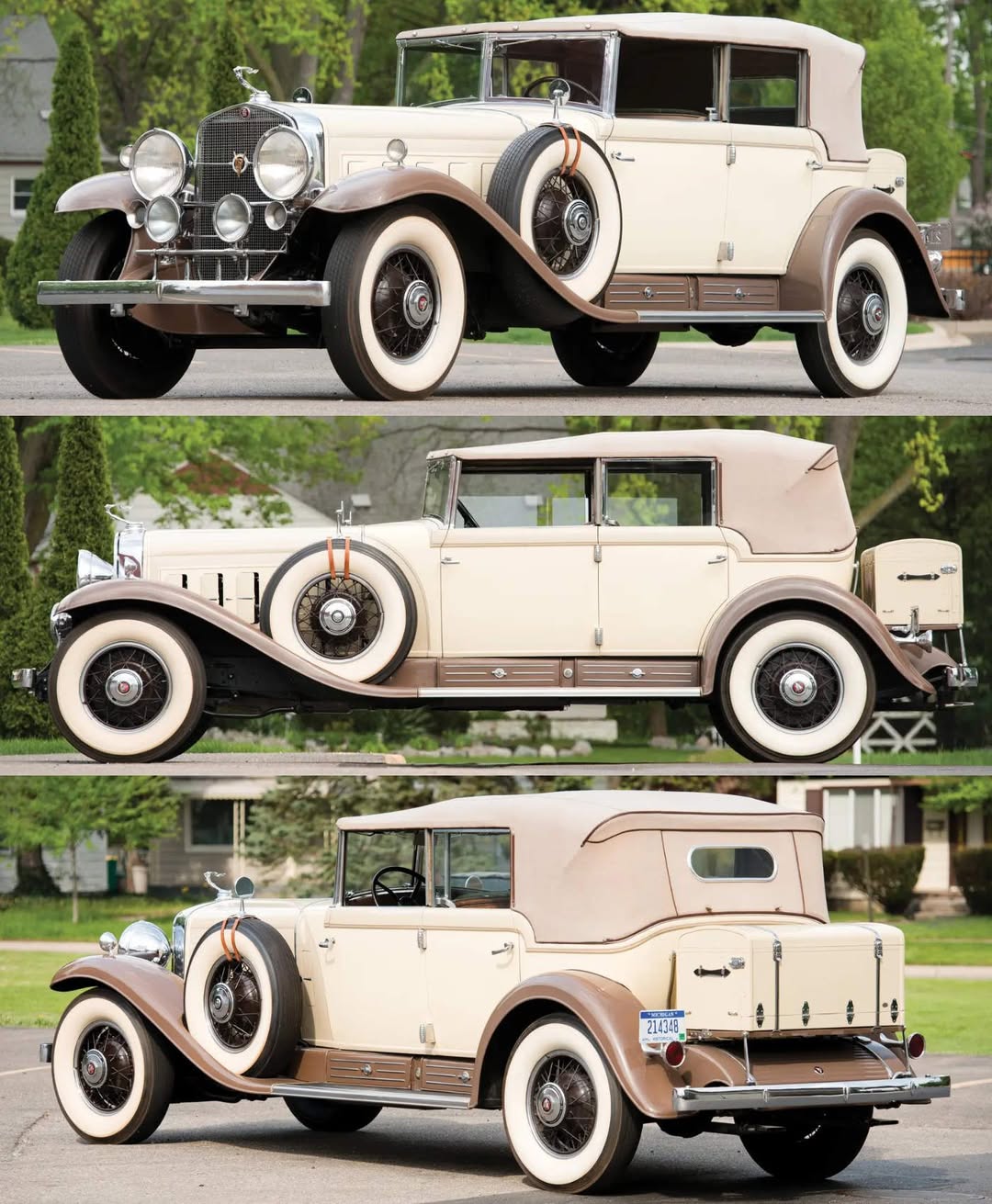
Source