1971 Mini Moke
Conceived by Alec Issigonis as a parachute-deployable light military vehicle, the Mini Moke failed its original brief almost immediately.
The British Army determined it was unsuitable for field use (the low ground clearance, 10-inch wheels, and front-wheel-only drive left little room for optimism off-road). What followed was a pivot to civilian life, and the Moke found a more natural home in the hands of beachgoers than soldiers.
British production ran until 1968, turning out 14,518 units; from 1966, BMC established a manufacturing plant in Sydney that would eventually produce 26,142 Mokes through 1981.
The Australian cars differed from their UK counterparts in meaningful ways (13-inch wheels replaced the original 10-inch items in 1968, with longer rear trailing arms improving practical off-road and beach capability, while canvas deck-chair seats replaced the metal pans of the British version).
Power came from BMC’s A-series inline-four (typically 998 cc by this point), matched to a four-speed manual. Suspension front and rear used rubber cone springs in true Mini fashion, with independent geometry at each corner.
The doorless, roofless body measured 80 inches between axles and typically weighed around 1,300 lb (590 kg).
The Moke’s cultural footprint exceeded its sales figures considerably (it appeared in The Prisoner and became the preferred transport on several Caribbean islands and resort destinations). Combined output across UK, Australian, and Portuguese production reached approximately 50,000 units over a roughly 25-year run.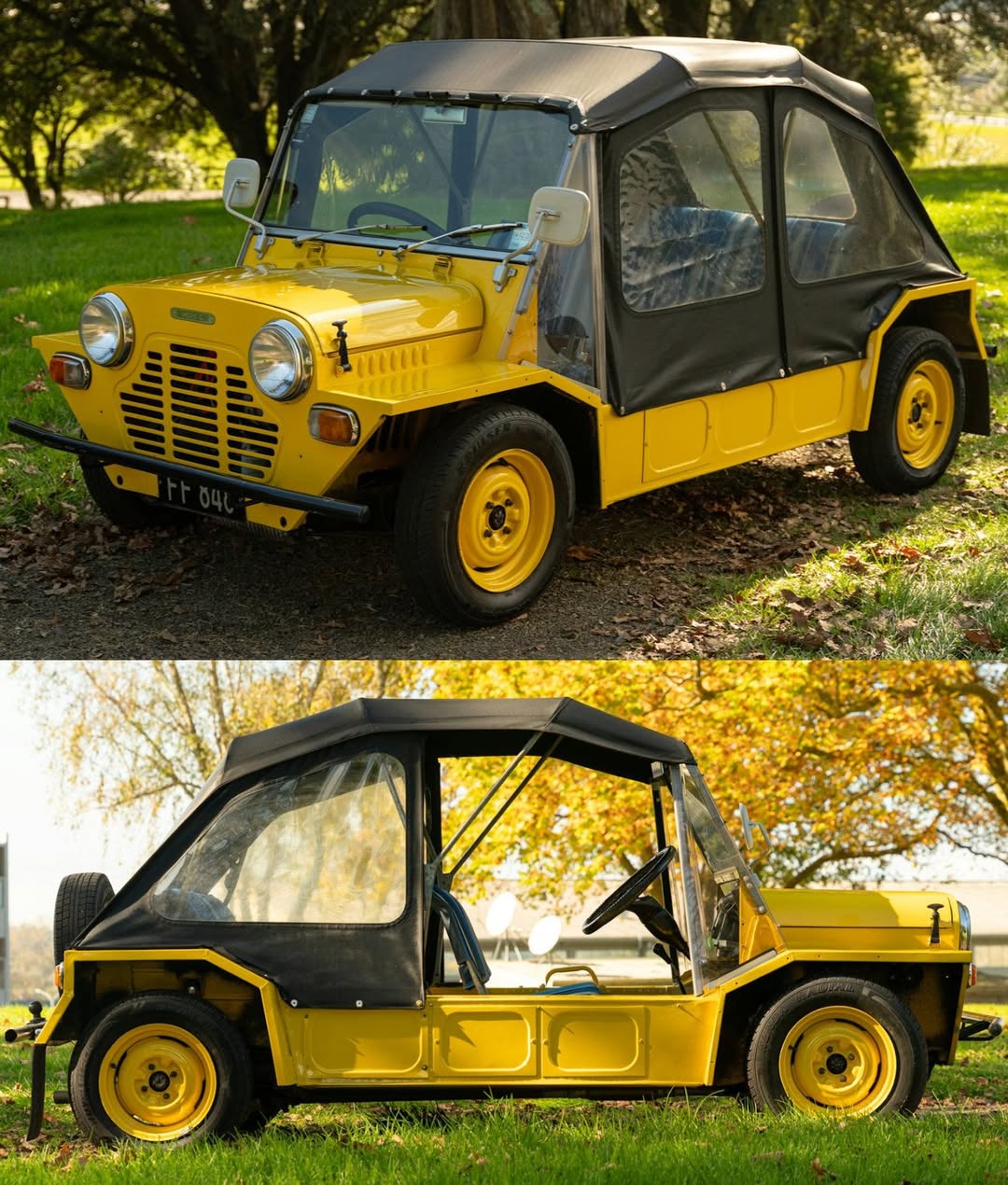
Source