1951 Frazer Vagabond (the first hatchback?)
Conceived as an innovative utility sedan, the Frazer Vagabond featured what Kaiser-Frazer described as a “hatchback” design (years before the term became common in the automotive world).
The rear deck incorporated a two-piece opening system: the upper section (which included the rear window) lifted upward, while the lower portion folded down like a tailgate. This clever arrangement provided access to a surprisingly spacious cargo area, complete with wood skid strips and wood-trimmed side panels.
Only 2,951 units were produced for 1951, making it one of the rarer postwar American production cars.
The exterior styling presented a clean, streamlined appearance with full wheel covers, bumper guards, and wide whitewall tires. Inside, the Vagabond featured upscale trim for its class, with leather or high-grade vinyl upholstery, matching carpets, and an AM pushbutton radio.
Power came from a 226 cubic inch L-head inline six-cylinder engine equipped with a Carter carburetor, paired with a three-speed manual transmission. The chassis used a semi-floating rear axle with semi-elliptic leaf springs and a conventional independent front suspension.
Kaiser-Frazer marketed the Vagabond as a versatile vehicle suitable for farmers, salesmen, and families alike, emphasizing its dual-purpose nature as both a passenger car and light hauler. However, its relatively high price and reliance on six-cylinder power placed it at a disadvantage against competitors offering V-8 engines.
Despite limited sales, the Vagabond’s forward-thinking design has since earned recognition as one of America’s earliest true hatchbacks.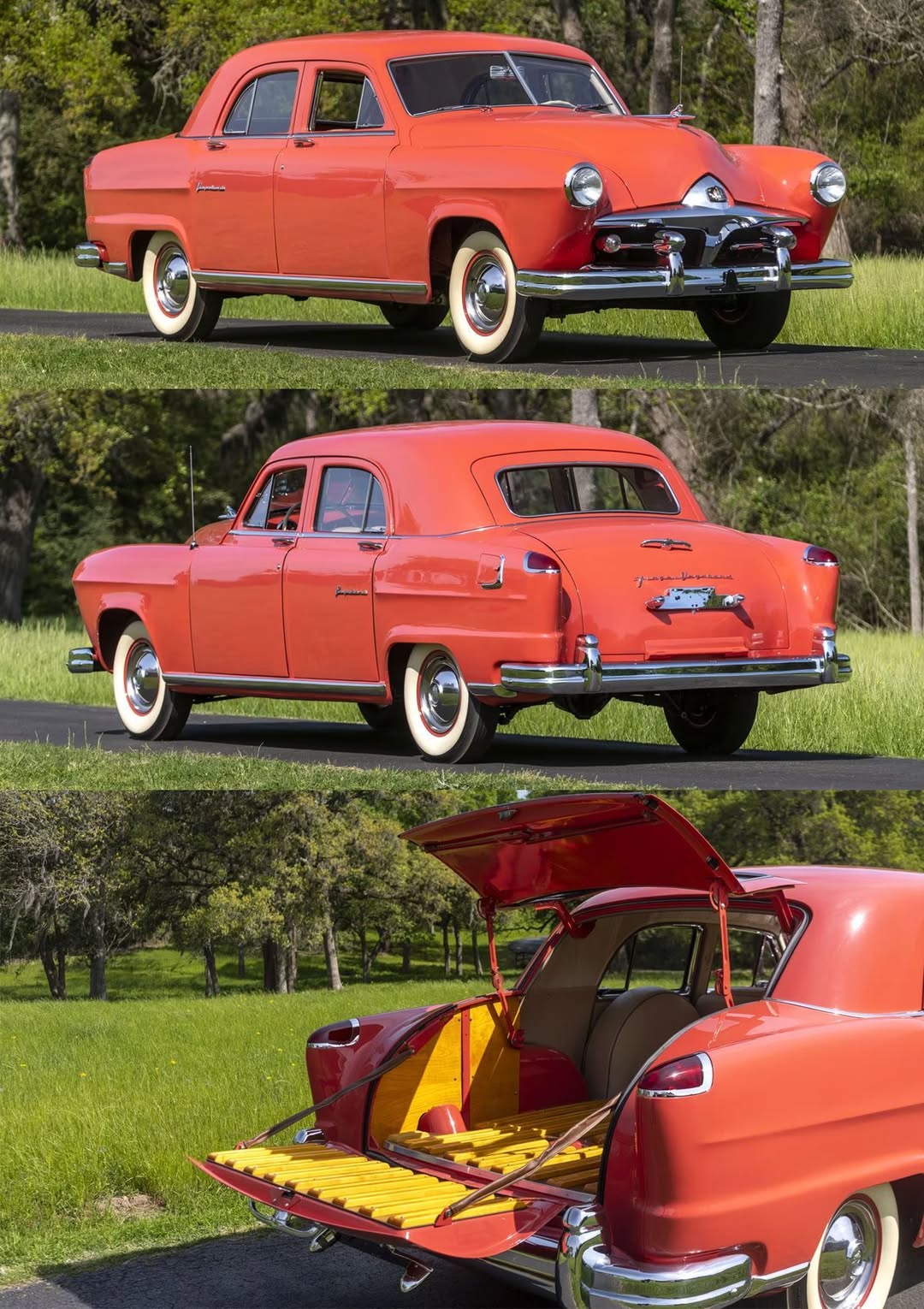
Source