1950 Ferrari 166 MM/212 Export “Uovo”
Giannino Marzotto sought greater aerodynamic efficiency and lighter weight after his 1950 Mille Miglia experience. Rather than order standard Touring bodywork, he collaborated with Padua coachbuilder Paolo Fontana and aeronautical engineer Franco Reggiani, who drew on aircraft construction principles to create the futuristic coupé body.
Built on a Ferrari 166 MM chassis after delays in receiving a 212 Export frame, the Uovo used Peraluman alloy (an aluminum-magnesium blend) for its lightweight skin. The design eliminated A-pillars, replacing them with braided steel cables that supported a Perspex windscreen.
Power came from a 2,562 cc (2.6-liter) Colombo V12 transplanted from a 212 Export, running triple Weber carburetors and producing approximately 190 horsepower at 7,000 rpm. Weight savings of around 330 pounds (150 kg) over a comparable Touring-bodied Ferrari gave the car a strong power-to-weight advantage.
The Uovo used twin shock absorbers, Formula 2-style brakes with a cockpit-adjustable regulator, and a massive 156-liter (41.2-gallon) fuel tank capable of over 340 miles (550 km) of range (ideal for endurance racing).
The driving position was mounted unusually far back, following Enzo Ferrari’s advice to improve oversteer sensitivity. This contributed to the car’s unique balance and precise feedback at speed. Despite its unconventional layout, Marzotto found it extremely quick (matching factory 4.1-liter Ferraris in race pace).
The Uovo debuted in the 1951 Giro di Sicilia and later competed in the Mille Miglia, where it led for much of the event before withdrawing due to mechanical trouble. It went on to win the 1951 Coppa della Toscana and the 1952 Trento–Bondone hillclimb with Giulio Cabianca.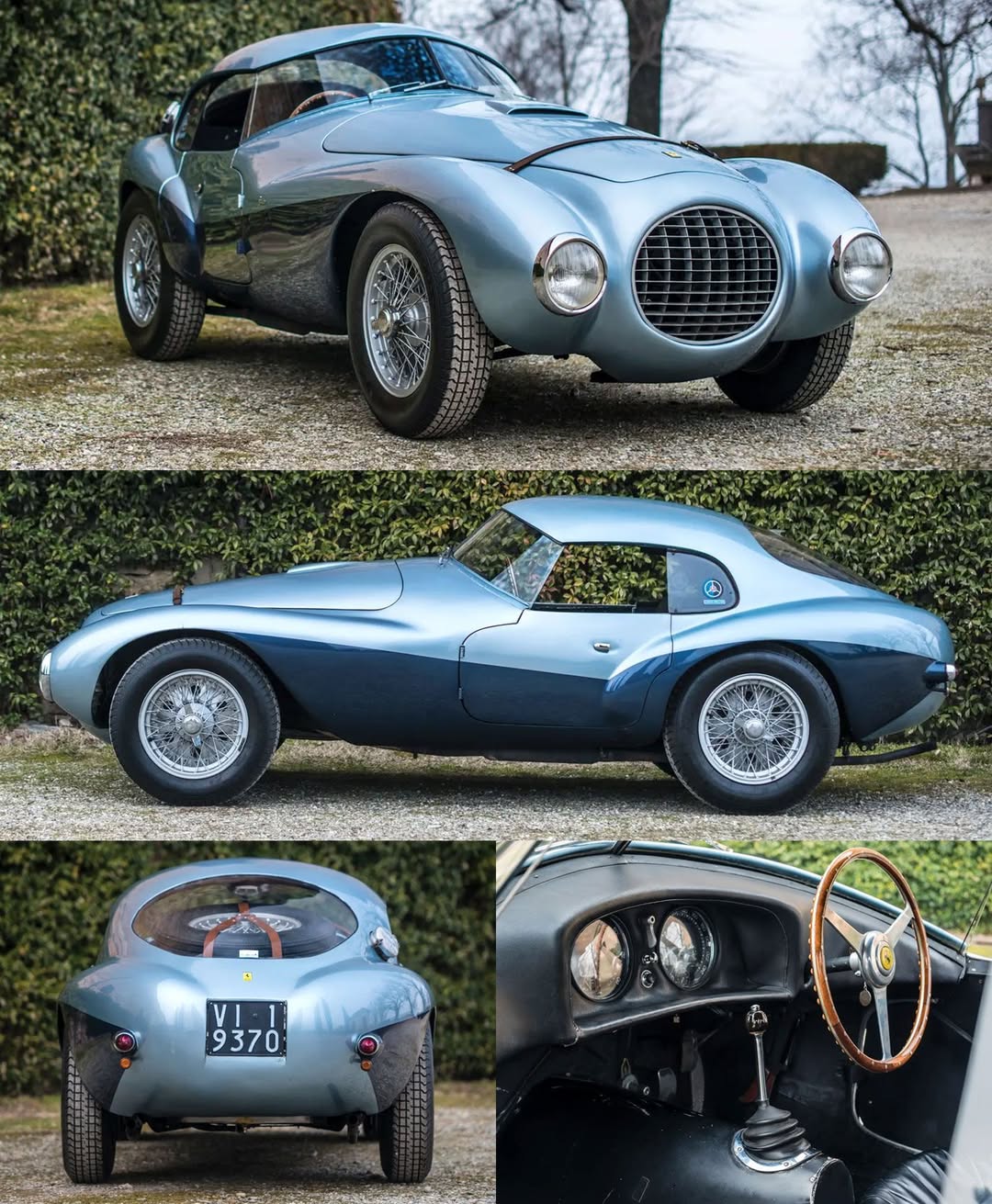
Source