1934 Lancia Augusta Saloon
Lancia’s Lambda revolutionized automotive design in the 1920s with stress-bearing body construction and narrow-angle V4 power. The Augusta brought that engineering sophistication to a more compact package when production began in 1933 following its debut at the 1932 Paris Motor Show.
Built alongside the larger Astura, Dilambda, and Artena models, the Augusta represented Lancia’s entry into a market segment traditionally dominated by less technically advanced competitors.
The 1,196 cc overhead-valve V4 engine produced 35 HP, delivering a top speed of about 65 mph through a four-speed manual transmission. Lancia’s patented sliding-pillar independent front suspension provided superior ride quality and road holding compared to conventional beam-axle designs, while the rear used a live axle with semi-elliptic leaf springs.
Available as either a four-door saloon or a two-door cabriolet on a 104.3-inch wheelbase, the Augusta competed against Fiat’s aggressively priced 508 Balilla while maintaining a strong emphasis on build quality and refinement.
Production continued through 1936, totaling approximately 17,217 units, including roughly 3,000 examples built at Lancia’s French factory in Bonneuil-sur-Marne, where the model was marketed as the Belna.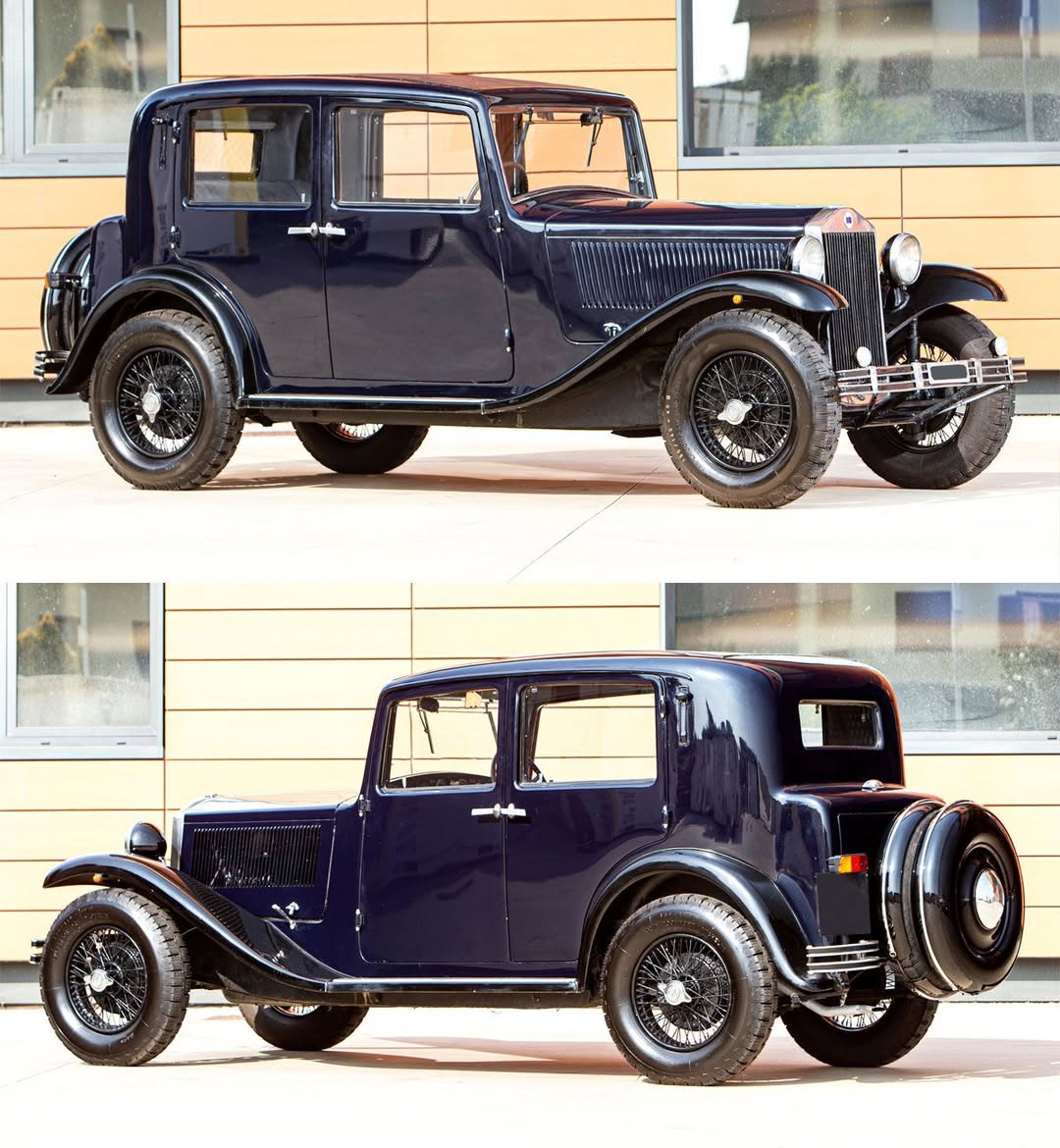
Source